Find what you came for quickly, by using the search box below to search our expanding site or the web.
If you can't find what you are looking for, email us using the Contact page.
Google

Korean War Veterans 18th Fighter-Bomber Wing

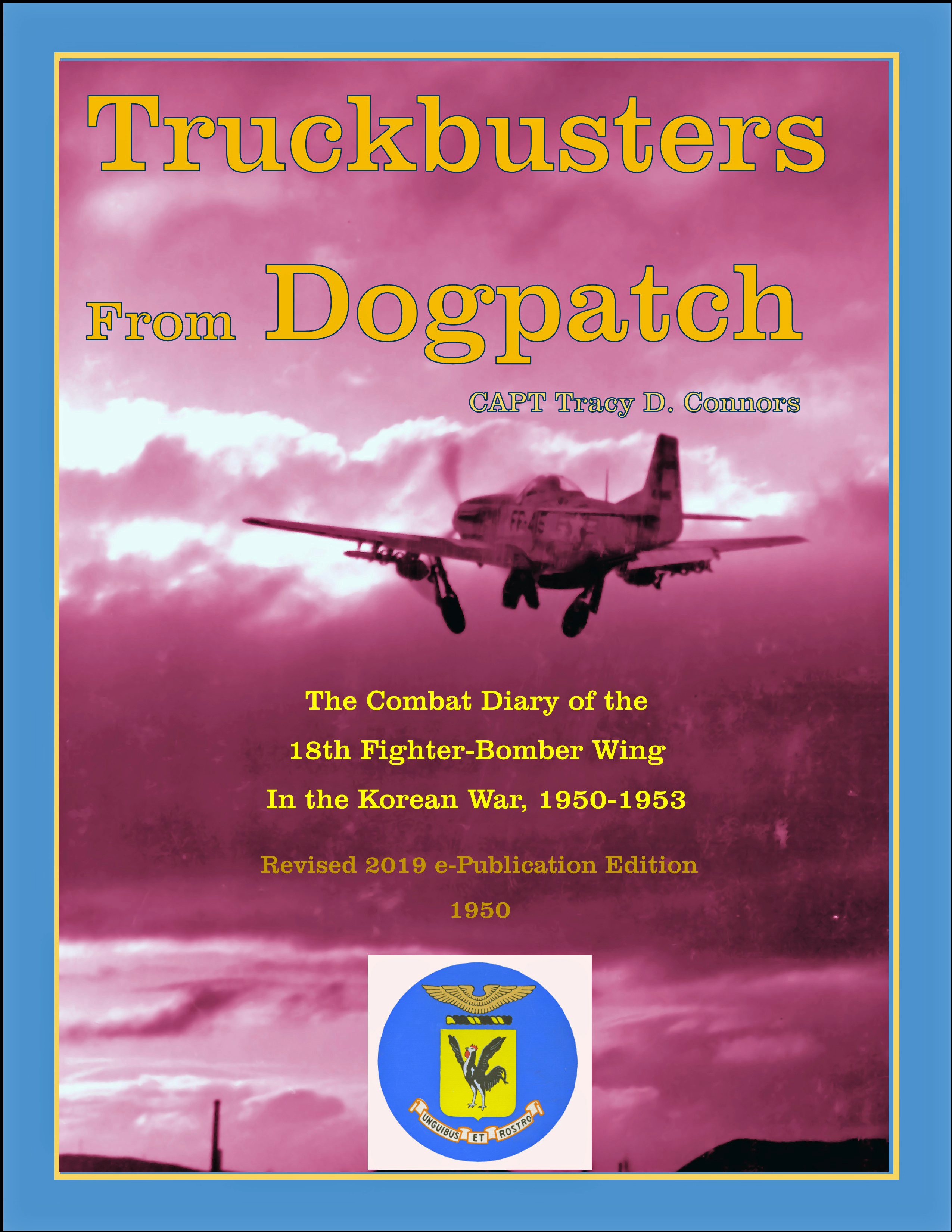
Honor Roll of Korean War Veterans of the 18th Fighter-Bomber Wing, 1950-1953. height=
Honor Roll of Korean War Veterans of the 18th Fighter-Bomber Wing, 1950-1953.

Pilots and Airmen of the 18th Wing killed in combat are listed in italics-bold faced.  

If you know of a Korean War Veteran who served with the 18th Fighter-Bomber Wing or any of its component squadrons during the Korean War and is not listed below, please feel free to use the contact form above to bring the name to our attention.  Please include any supporting information/background that is relevant.  We will add the name to the Honor Roll and include your name as the nominee.

Korean War Veterans 18th Wing: AB C D E FG H I J ♦ K ♦ L M ♦ N ♦ O ♦ P ♦ Q ♦ R ♦ S ♦ T ♦ U ♦ V ♦ W ♦ X ♦ Y ♦ Z


-B-


Baade, J.L.

Lt. Ted Baader
Lt. Ted Baader

Baardseth, Albert R.

Capt. Joseph Mathews Babassa, Jr. - 67th pilot who, in July 1951 was KIA near Pyongyang, NK.
Babasa, Capt. Joseph Mathews, Jr. - 67th pilot who, in July 1951 was KIA near Pyongyang, NK. “Sadly, it was on this mission that the “gallant and experienced” 1st Lt. Joseph Babasa, disappeared. He was last seen “rolling into his dive.” Babasa was flying number 3 in the lead flight whose mission was flak suppression of known positions around the airstrip. “He was an extremely aggressive and competent pilot who would have pressed home his attack with extreme disregard for his personal safety.” By July 1951, Babasa had completed the magic 100 missions, and was awaiting rotation orders when his brother, with the 1st Marine Division, was KIA. He received permission to continue combat until his brother’s body was ready for escort to the Z.I. He was on his 106th mission, flying flak suppression when he rolled into his dive bomb run and disappeared, recalled Col. Robert Pasqualicchio.
Babasa, Capt. Joseph Mathews, Jr. - 67th pilot who, in July 1951 was KIA near Pyongyang, NK. “Sadly, it was on this mission that the “gallant and experienced” Capt. Joseph Babasa, disappeared. He was last seen “rolling into his dive.” Babasa was flying number 3 in the lead flight whose mission was flak suppression of known positions around the airstrip. “He was an extremely aggressive and competent pilot who would have pressed home his attack with extreme disregard for his personal safety.”

Babcock, Robert

Babcock, Warren E.
Bach, George A.
Backman, Dale F.
Bacola, Simon
Bade, Jack
Badenhorst, Capt. W.J.J. - 2nd Squadron SAAF KIA on 2 March 1951. “Badie” Badenhorst was one of the four original Flight Commanders arriving in Korea with the squadron in November 1950. He was KIA leading an armed reconnaissance mission along a section of the MSR between Sinanju and Chonju. His plane was hit by flak when the flight at very low altitude drew heavy AA fire. His Mustang appeared to be out of control when it porposed in after being hit, and then crashed in flames into Sinanju.
Badger, Thomas
Bails, Richard L.
Bailey, Gayle M.
Bailey, Kenneth F.
Baird, Floyd C.
Baird, James K.
Baker, Buford O.
Baker, David
Baker, Donald
Baker, Robert H.
Baldauf, Eugene J.
Baldwin, Ernest A.
Baldwin, Rexford
Bales, George C.
Ball, Harlan E.
Ball, Jackson W.
Ballard, Dewey E.
Ballhousen, G.W.
Banasky, George E.
Banfield, Kenneth C.
Bannon, Gerald P.

Baransky, 2nd Lt. Gus. J. 2nd Squadron pilot KIA on 20 April 1952. Lt. Baransky was flying as No. Three man a rescue flight—“FILTER RESCUE”--of four F-51s that had been circling Cho-do Island for about three hours. The Flight was led by 1st Lt. Wilbur “Budd” Stapley, of the 67th Fighter-Bomber Squadron. After three hours of circling, he and Lt. Gus Baransky were bored…among other things, Stapley was thinking about his 24th birthday, only two days away. Stapley’s luck “had been running badly.” About a week before, on Easter Sunday morning, his bird had taken a direct hit on the tail wheel from a 40-mm shell. Suddenly, “D Dog Channel burst with chatter.” Stapley was given the coordinates for an F-80 pilot “in trouble,” and immediately turned his flight in that direction and moved out from “loiter” speed to “combat” speed. Enroute, Stapley contacted “Shirley, our controller” and informed them that I thought the helicopter would need an escort to the area as it was a well known hot spot, and asked if they could divert any F-51 flights in the area to Cho-do.” Shirley had bad news for Stapley. “There were no fighter aircraft available of any kind.” When Stapley arrived over the area, he contacted the F-80s in the flight to pin point the position of the downed pilot. They assigned Winberg a new call sign: “Downed Pilot.” Filter RESCAP was so far from friendly territory, that Stapley could not contact Shirley control from a low altitude. To maintain radio contact, he had he No. 2 man, who was on his first mission, climb to about 10,000 feet to establish radio contact. Then, Stapley led his flight in a “couple of straffing passes to clear out several groups of enemy soldiers from the area.” Winberg could only talk to the RESCAP when they were directly in “line of sight.” In addition, he had trouble helping them pinpoint his exact location. To expose himself, as they requested at one point, might mean giving his position away to the growing number of uniformed searchers that were combing the slopes. Instead, he asked them to orbit over the next hill over from his—“as I was afraid they were attracting too much attention to my hill.” The news that Shirley control had for Stapley once he had reestablished radio contact was not good. Shirley advised him that “due to ground fog at Chodo, the helicopter could not take off.” Stapley was “astounded by this news because just fifteen minutes before when we left Cho-do the conditions were C.A.V.U.” [Ceiling and Visibility Unlimited] He had his “doubts” about the veracity of Chodo’s weather report. The real reason for the “unavailability” report was that the chopper had to be fitted with an extra fuel tank in order to have enough fuel to make the attempt. Throughout the afternoon, the RESCAP continued to orbit over the adjacent hill, even strafing it to fool the searchers into thinking they were protecting the American pilot who was hidden somewhere on THAT hill. Ground fire for the RESCAP was “as we were wont to say: ‘Intense to Unbearable’ and my flight started taking hits,” Stapley recalled. His No. 3 man, a South African pilot with Two Squadron—1st Lt. Gus Baransky--“went down in flames…I never saw an airplane blow up so completely like that…it just became a mass of flames…all you could see was the wingtips…for a moment…we were right on the deck and he didn’t have a chance.” Stapley found a fire in the vicinity of where Gus Baransky had been circling, and not wanting to lose sight of the earlier pilot they were 'capping', he went down to inspect the fire and found no sign of life, nor did he observe a parachute. They circled the area and were unable to find any sign of Lieutenant Baransky. Much later, after he had returned, Stapley counted ten bullet holes from small arms fire in his bird and his No. 4 man had several more holes in his plane. On the following day, 2 Squadron flew 15 rescue patrol sorties, out of a total of 18 sorties flown for the day. The first sortie effected the helicopter rescue of the USAF pilot whom Gus Baransky had been protecting when he was lost.

Barbee, Joe. D.
Barber, B.J.
Barber, H. S. J.
Barber, James L.
Barber, Kenneth H.
Barber, William R.

Barcus, Lt. Gen. Glenn O. - On 30 May 1952, Lt. Gen. Barcus replaced General Everest as Commander, Fifth Air Force. On 16 May 1953, General Barcus presented the Distinguished Unit Citation to the 18th Fighter-Bomber Group “in recognition of the Group’s outstanding contributions to the cause of the United Nations during the period 22 April 1951 through 8 July 1951.” During the opening months of World War II, Barcus was in command of the 22nd Fighter Squadron at Puerto Rico, followed by command of the 36th Group, and a period of duty in Trinidad to help form the Interceptor Command. In April 1942, he went to Washington as deputy director, Air Defense at Army Air Force Headquarters. In December 1942, Colonel Barcus assumed command of the Philadelphia Air Defense Wing. He remained there until April 1943, when he became commander of the First Fighter Command at Mitchell Field, N.Y. General Barcus went overseas in April 1944, proceeding to Naples, Italy, where he commanded the 64th Fighter Wing. In February 1945, he became commanding general of the 12th Tactical Air Command, with headquarters near Nancy, France. He remained in command of the 12th Tactical Air Command until ordered back to the United States in August 1946. In September he became chief of staff of the Tactical Air Command at Langley Field, and in March, 1947, was put in command of the 12th Air Force at March Field, Calif., remaining in command when it moved to Brooks Air Force Base, Texas. General Barcus assumed command of the First Air Force at Fort Slocum, N.Y., in September 1949, and a month later moved with it to Mitchell Air Force Base, N.Y. He became commanding general of the Tactical Air Command at Langley Air Force Base, Va., in July 1950. In June 1952, General Barcus was transferred to Korea where he assumed command of the Fifth Air Force. He remained there until the end of May 1953, when he returned to the United States to become vice commander, Air Training Command. On 31 May 1953, Lt. Gen. Samuel E. Anderson, USAF, assumed command of Fifth Air Force, replacing General Barcus.

Bardwell, Rex E.
Barhaugh, John H.
Barker, W.
Barmore, Jan W.
Barnard, Bruce
Barnes, Jack D.
Barnes, J.R.
Barnes, Lee
Barnes, Rufus R., Jr.
Barnes, Sam
Barnhill, Robert W.
Barr, Edgar E.

Barrett, A/2C James J. - 67th FBS armorer killed on 3 May 1953. Airman Barrett was killed on the Harmozation (sic) range by the accidental discharge of a .50-caliber machine gun.

Barringer, John E.
Barrow, C.D.
Barrow, Leonard J. Jr.
Barry, Lavern
Bartell, Ray R.
Bartholoma, John H.
Bartlett, Jack R.
Bartley, Joseph R.
Bartolich, Eugene
Bartow, Michael H.
Basham, Bill
Basista, John J.
Baskin, Homer R.
Bassing, Joseph E.
Batchelder, John H.
Bates, Allen S.
Batsel, Lee H.
Baughn, Richard
Bauman, Vince A.
Baumann, Ervin M.
Baxter, Walter H., III
Baxter,Thurston Richard
Beachler, Rob
Beadle, Glenn J.
Beals, William R.
Beamer, Harry R.
Beamer, James I.
Beamish, A. R.
Beauregard, Clarence
Beauregtard, Victor
Beaver, Charles R.
Bechtel, Paul S.
Beck, Howard G.
Becraft, Myron A.
Bedford, Donald R.
Bedford, Ross J.
Beeler, Clifford H.
Beggs, Cecil R.
Begley, W.R.
Beinkemper, Elmer H.
Bekker, F. N.
Belanger, Donald H.
Bell, Frank G.
Bell, John
Bell, J.P.
Bell, Roy E.
Bellows, 1st Lt. James Mayo, Jr.- 12th FBS pilot KIA 18 June 1953. Bellows was flight leader on Mission Expire 17, airborne at 1830 on MPQ mission. The Number 4 man, Lt. Sprague, could not release his bombs so the flight turned North to attempt to salvo the bombs. After jettisoning bombs and again turning south, intense and accurate automatic weapons fire was encountered, some of which hit the lead in the engine section. Lt. Bellows aircraft was hit in the aft section and flamed out. The flight went to the emergency channel. The last transmission received by the flight was, “I’m at 3,000 feet and am being shot at. I’ll have to get out soon.” The pilot crashed in the aircraft. The flight stayed in the area until low on fuel and then withdrew. The pilots did not sight Bellows but a ground party recovered his body. The primary cause of the loss was due to enemy automatic weapons fire. The Air Force investigation recommended “that briefings stress avoidance of known AAA areas and that aircraft fly at altitudes where the guns are least effective.”
Benavidez, A.C.

Beneke, Capt. Walter C., Jr. “Tex” - 67th FBS pilot KIA on 31 May 1953. Captain became the first combat casualty suffered by the 67th in almost a year. He crashed and burned on take-off and died a few hours later.” Captain Beneke was the brother of Tex Beneke, the bandleader who formerly sang with the Glenn Miller orchestra, explained former S/Sgt Louis J. Cain. Beneke was also known as “Tex” by his fellow pilots. It had been raining continuously for several days, Cain explained, and “it was feared that the earth would wash out from under the runway.” LTC Harry Beamer, Personnel Officer, “ordered us to get down there, shovel sand into bags, and pile them along the edge of the runway. The planes took off in flights of four, and we naturally viewed the action from that vantage point. We could see a plane tumbling over and over far down the runway. We learned later that it was Captain Beneke who had crashed.” An F-86 aircraft, fully loaded with bombs and machine gun ammunition, began its take-off from K-55 for a combat mission. “The aircraft failed to become airborne and crashed.” LTC Glenn A. Stell immediately ran to the burning plane to attempt a rescue of the trapped pilot. “Fully aware that the aircraft’s armament and fuel might explode at any moment,” Stell disregarded his own personal safety as he tried to save the pilot’s life. “Approaching the aircraft he found the canopy smashed and the cockpit in flames with the pilot still trapped in his flaming cockpit. Despite the searing flames and danger of explosion,” Stell removed the pilot from the burning wreckage. “With the help of others he carried the pilot to a safe distance away from the shattered aircraft and then stripped the burning tatters of clothing from the pilot’s body.” Stell was awarded the Soldier’s Medal. In other action, Beneke had earned the Bronze Star and DFC.

Benner, Jack
Bennett, Chauncey A.
Benoit, Ben R.
Benson, Richard V.
Benson, Robert D.
Bentley, Ellis
Berkes, Thomas D.
Berkow, Joe
Berna, Peter P.
Bernard, John A.
Bernier, Howard
Berry, C. L.
Bertrand, Richard E.
Bethke, Floyd E.

Bettis, 1st Lt. Allan Shields - 12th FBS pilot KIA in April 1952. Lt. Col. Joseph T. Crane, Jr., USAF, CO of the 12th FBS wrote to Lt. Bettis’ family on 15 April 1952, “I know that you are terribly upset and in an effort to relieve some of the uncertainty and anguish I will attempt to reconstruct as well as possible the events leading up to Al's accident. Al departed K-46 Air Base in Korea at 16:45 on April 13, 1952 with a flight of four aircraft. Their mission was to bomb rail lines 6 miles Southeast of Chongju on the Northwest coast of North Korea. The flight to the target was uneventful and the dive bomb run was started. From pilot reports Al's aircraft was seen, apparently hit by anti-aircraft fire and out of control. The aircraft was observed to crash with no evidence of parachute. The pilots with him immediately searched the adjoining area of the crash but no signs of life were observed." Another account was written on 14 April 1953, by Major General John H. McCormack, USAF, Director of Military Personnel, noted, "The review just completed concerning your son discloses that he was a member of a four plane flight of F-51 aircraft which departed Hoengsong Airdome, Korea, on 13 April 1952, for a rail cutting mission in the vicinity of Chongju, North Korea. The flight arrived over the target without incident and began the attack. Lieutenant Bettis' plane was seen as he started his bombing pass, but continuous observation of his F-51 was not maintained because of the prevailing conditions. As the flight leader pulled up from his pass, he noticed your son's aircraft in an inverted spin at an altitude of 5000 feet. He immediately radioed Lieutenant Bettis to bail out but received no response. The F-51 momentarily appeared to be under control but upon descending to 2000 feet, it began spinning again and crashed to the ground, exploding upon impact. An aerial search of the crash area by the accompanying pilots failed to find any trace of your son or his parachute and to date no further information has been received which might clarify his status." Another account specified Major Bruce R. Clark as the group leader that day.

Betz, John C.
Bever, William C.
Bickel, David W.

Biden, 2st Lt. N. - 2nd Squadron pilot KIA on 5 September 1951. Lieutenants “Flash” Biden and Don Parks of the “Flying Cheetahs,” were flying top cover for Lt. Willem van den Bos, downed near Sunch’on while trying to rescue an American pilot. Hit in the cooling system by small arms fire, the engine of Willem’s Mustang failed at a low altitude and caught fire. He successfully belly landed it in a stream bed, jumped out and took cover in a ditch until the rescue helicopter arrived about 45 minutes later. After flying top cover during the rescue, Biden and Parker left the area for another target in the “Punchbowl” area where they were to napalm an artillery position. Biden was last seen in a shallow diving attack on the emplacement—a dive from which he never recovered. His plane crashed and burned. No sign of life could be seen by his wingman.

Bidgood, P. E.
Biederstadt, Roger
Bielefeldt, Vilas L.
Bierbaum, Henry
Biggs, Ernest E.
Bilgnaut, H. P.
Bingham, Victoria
Biondo, Michael
Birch, George
Birch, George A., Jr.
Birk, Leroy, A.
Bishop, Charles J.
Bishop, Ken
Bissett, R. G.
Bist, Stan J.
Biteman, Duane E. “Bud”
Bitzer, Medon Armin
Bjorklund, Frans W.
Blaauw, J. P. D.
Black, Elbert D.
Black, Fred E.
Black, Winston S.
Blackley, Peter
Blackwell, F.B.
Blackwell, Walter S.
Blair, James Birney
Blake, Louis B.
Blakeney, Lewis
Bland, J.D.
Blandford-Newton, J. A.
Blank, H.P.
Blank, Robert R.
Blankenship, Jack B.
Blatt, John M.
Bledsoe, Clayton C.
Blesse, Frederick C. “Boots”
Blood, Ralph
Bloodworth, William
Blose, James W.
Blum, Caroll A.
Bocquin, Victor E.
Bodak, John
Bodiford, Hugh
Bodine, Francis S.
Boehm, John L.
Boerner, Charles E., Jr.
Boeye, John F.
Boggan, Johnie J.
Boggs, Thomas, Jr.
Bohrer, John W.
Boisen, Martin H.
Boland, Lawrence J.
Boles, C.L.
Bolin, David L.
Bolitho, John C.
Bollinger, Robert M.

Bolt, Capt. Donald - 12th FBS pilot KIA on 2 October 1950. On that morning, Don Bolt flew an early, pre-dawn mission to Pyongyang, North Korea's capitol city, remembered his friend and fellow pilot, LTC Duane “Bud” Biteman. His airplane was once again hit in the engine by ground fire, and he was able to glide just clear of a low ridge of hills southeast of the city before having to belly-in on a small, open rice field which was surrounded by a mile-wide ring of trees. After the Mustang came to a stop, Bolt jumped quickly out of the cockpit, onto the wing, then started running across the dry rice paddies toward the nearest trees. He stopped abruptly, after covering about a hundred feet, according to his flight leader who was by then circling overhead, and Bolt ran quickly back to the far side of his crippled airplane, ducking low as he ran. He pointed his arm toward the trees and the flight leader could see enemy troops jumping out of a truck alongside the trees. The leader made a strafing pass, firing his machine guns between Don's aircraft and the North Korean truck, making sure not to hit the troops but, at the same time, giving them notice to stay back and leave Bolt's airplane alone. He called Mellow Control for help, giving Don's position and the fact that he appeared to be uninjured. He would remain overhead to keep the enemy away as long as his fuel held out ... perhaps another forty-five minutes, then requested other flights to take over the top-cover until a helicopter could be dispatched from Kimpo Air Base, 85 long miles southwest, to come pick Bolt out. It was by then approximately 7:30 AM on a crisp, clear autumn morning ... when the air war over Korea stopped, 'seemed to come to a complete halt ... just to cover the downed Lieut. Don Bolt. Every Far East Air Force fighter airplane in the area was suddenly dedicated to the protection of Don Bolt ... who was by then sitting dejectedly on the wing of his downed Mustang, watching the ever-changing flights of fighters circling overhead. Ground targets took second priority as Mellow Control coordinated the air effort to keep a minimum of four fighters circling the immediate area at all times, watching to assure that no troops attempted to close in on Don Bolt. Meanwhile, attempts were being made to line up a helicopter and crew. We did not know, until then, however, that the maximum range of those ancient, early H-5 helicopters was less than 150 miles; there was no way that they could fly from Kimpo to Pyongyang to pick up Bolt, and have any chance of returning to friendly territory. Still, the combat air patrol (CAP) remained overhead all through the day, dipping low periodically to strafe between the trees and Bolt's ship, to remind the Red troops to stay away. By mid-afternoon there were enemy troops surrounding the entire field, and Don lay hunched low behind the wing; he had apparently been shot at while sitting on the wing. Each succeeding flight of circling fighters found it necessary to fire a burst of machine gun fire to keep the troops back behind the trees. Still, no means could be devised to pick Don out of his menacing circle. Finally, as dusk turned to darkness, after scores of combat sorties were diverted to protect him, Major "Moon" Mullins flew our last patrol ... when Bolt was last seen alive, and still crouched beneath his Mustang. Moon said that he was sorely tempted to strafe the entire circle of enemy troops and vehicles, but didn't dare; surely such action would be the single act to trigger the killing, on the spot, of Don Bolt. He might just as well have strafed the Red troops. For, a week later, after our forces took Pyongyang, we received the rumor that the Graves Registration people had found Lieutenant Don Bolt's body buried in a shallow grave just a short distance from his airplane. He had reportedly been shot in the back of the head, execution-style. First Lieutenant Don Bolt didn't receive the Medal of Honor; nor the Distinguished Flying Cross or, most likely, not even the Air Medal. His parents were probably very proud to receive just the simple Purple Heart medal and a flag. There were no military formations held in his honor, nor is there a commemorative corner in his name at the Air Force Academy, or at any other Air Force base. But in my book, if I were forced to make a reluctant comparison between my two heroic friends, Lou Sebille or Don Bolt, as to which was the most courageous, I would have to say that Don Bolt was my greater hero. I would base my choice on the fact that Don Bolt, the insecure little First Lieutenant volunteered to fly combat in Korea, even though he realized his own limitations, and lack of current flying experience. Then, after suffering the trauma of once being shot down, he had the temerity ... the plain, unadulterated 'guts' to fly further combat missions, one right after the other, until he was finally shot down once again. Then this little guy, who wasn't 'macho' enough to be accepted as 'one of the boys' in the squadron at Clark Field, sat next to his disabled Mustang for ten long hours, all the while surrounded by armed enemy troops ... when the best efforts of the entire Far East Command were unable to devise a way to pick this man from 85 miles behind enemy lines before darkness fell, Biteman wrote.

Bolton, H. N.
Bolton, James C.
Bonanno, Frederick Ramon
Bond, Roy S.
Bonham, Earl I.
Bonk, Eugene
Bonner, Frederick M.
Boone, Robert
Borders, Andrew J.
Bordley, Arthur B.
Borges, Peter
Boriss, Frank H.
Borman, Frank
Borman, Fred A.
Borsare, Edward F.
Bortner, Jon J.
Bos, Earl B.
Bosak, Edward M.
Bosch, A. C. J.
Bosman, J. J.
Botha, J. C.
Botha, M. C.
Botha, W. P. B.
Bothwell, James W.
Bott, M.S.
Boucek, James A.
Boucher, Gerald V.
Boudreaux, Adam J.
Bough, Stan G.
Bourne, Sam L.
Bowers, Charles J.
Bowers, Richard W.
Bowman, Byran
Bowthorpe, Ben
Boyd, Percy K.
Boynton, Maynard A.
Bozeman, Wallace H.
Bracey, H.N., Jr.
Bracke, George P.
Bradford, Lee W.
Bradfute, Roland G.
Bradley, Charles H.
Bradley, John L.
Bragg, Ceibert O.
Braley, Alfred R.
Branch, Alva G.
Brannon, Gerald
Brashears, Virgil Jr.
Brass, Ernest H., Jr.
Bratcher, Thomas
Brazelton, Leonard G.
Brazill, William R.
Bresko, Joseph T.
Brett, Devol “Rock”
Bretting, Martin M.
Brewer, Edwin H.
Brewer, Owen T., Jr.
Brewster, Gordon F.
Bridges, Dewey R.
Bridges, William D. Jr.
Brinkmeyer, Vernon

Brinson, Col. Sheldon S. - Succeeded Major Frank L. Orth as CO of the 18th FB Group on June 18, 1952. Orth “for a short period, was Commanding Officer of the Group.” Prior to Orth’s short tenure, Colonel Seymour Levensen commanded the Group. [Other records cite the turnover as taking place on 17 May 1952, probably to avoid noting the “bridging” period provided by Major Orth.]

Bristow, Henry C.
Britten, Morton D.
Britton, Louis E.
Britzke, John
Brizzi, Vincent H.
Broberg, Melvin E.
Brock, Foster D.
Brooks, Bruce J.
Brooks, David H.
Brooks, H. J.
Brooks, James W.
Brothers, Thomas J.
Broughton, Arthur

Brousseau, S/Sgt Norman - Crew Chief S/Sgt Norman Brousseau, A/2C Harold Hudren and A/3C Freeman Finley worked for two months on refining and improving the process followed to change the engine on an F-51. The usual time for the complex job was approximately 125 hours. Finley and his team “whizzed through the job in the breath taking time of 40 hours and 30 minutes.” The men were honored by the Group and lauded by Capt. William Wakeham, maintenance supervisor. “I defy any other three men to perform the same job in a comparable length of time.” The Truckbuster noted, “The teamwork exhibited by these men, each of whom was from a different Squadron, reflects the attainment of cooperation that is possible at Dogpatch. The Squadrons represented were the Foxy Few, Blinker Nose and the Red Scarfers.”

Brown, Cliff
Brown, D. M.
Brown, Donald S.
Brown, Elwood E.
Brown, Harvey L.
Brown, Jack F.
Brown, James D.
Brown, Jeff “Jiffy”
Brown, John
Brown, Norwood J.
Brown, Richard G.
Brown, Robert C.
Brown, W.C., Jr.
Brown, Warren G.
Brown, Willis Ray
Bruce, Jim
Bruce, Leonard K.
Bruce, Lloyd
Brumskin, J.A.
Brunner, Loren
Brunke, Charles R.
Bruno, Romano
Brunson, J. T.
Bruska, Ed
Bruton, Earl D.
Bryan, Frank T.
Bryan, William E., Jr.
Bryan, William F.
Bryant, Lynwood C.
Bryant, Wylie L.
Bublinec, Frank
Buchanan, Riley
Buchanan, Riley
Buck, A. J.
Buckley, Donald I.
Bughman, Niles J.
Buie, Archie
Buie, Archie P., Jr.
Bullard, Exum F.
Bullock, A.W.
Bunderson, Mack V.
  Bunn, Russell A
Bunting, Dr. John J.
Burge, Homer O.
Burger, C. E. R.
Burger, H.J.P.
Burger, W. J. W.
Burgess, Benjamin F.
Burke, Clarence L.
Burke, Joseph
Burke, Vernon W.
Burke, Walter H.
Burnell, Everett O.
Burkett, Marvin V.
Burkett, William M.
Burnett, Clifford H.
Burnette, Dewey W.
Burnette, Walter N.
Burnley, Robert S.
Burns, Allen A.
Burnsed, M/Sgt
Burpee, Chas. D., Jr.
Busby, Ernest C.
Busher, C. J.
Bushlow, Anthony J.
Bussio, L. F.
Bustamante, Benito
Butcher, James L.
Butler, James J.
Butler, Jerome F.
Butler, Merwin
Butler, T. C.
Buttry, Paul D.
Buttyan, Eugene C.
Buzze, Frank C.
Byers, James L.
Byers, Rex A.
Bynum, Richard E., Jr.
Byrd, Crawford
Byrd, Kenneth E.
Byrne, Ronald E., Jr.
Byrnes, Robert
Byrom, Richard

Next Page